
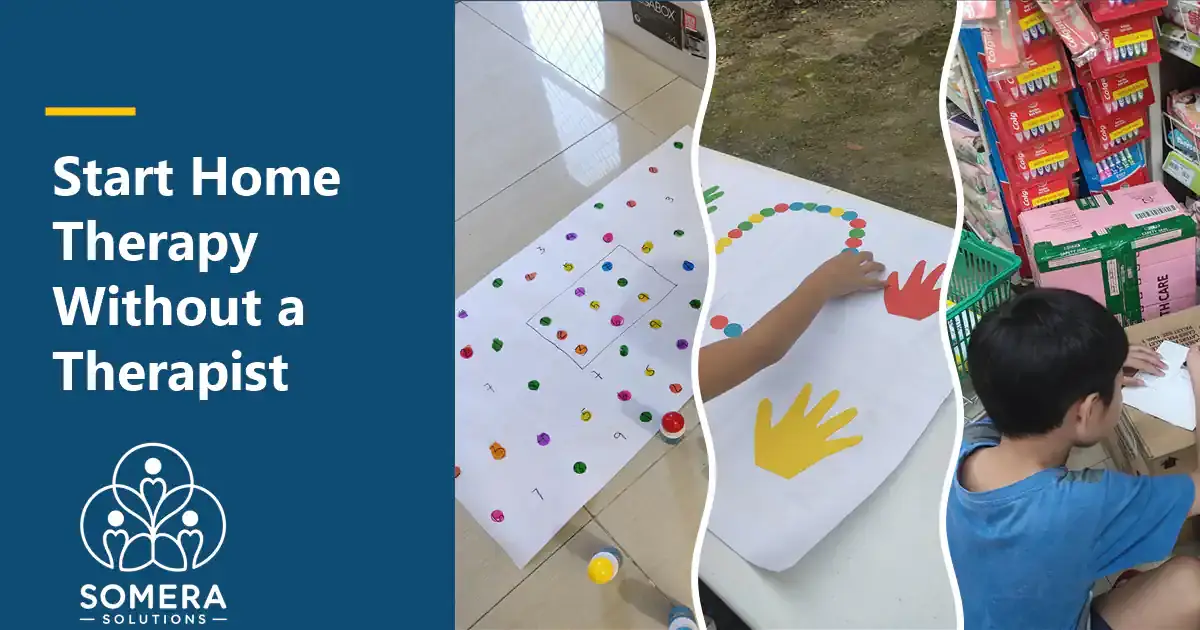
You can start home therapy today with what is already in your kitchen and a few free resources.
You do not need a therapy room. You do not need a big budget. You do not need to wait until a therapist has a free slot. You need a calm ten minutes and a small, kind plan.
How do you start home therapy without a therapist? Begin small. Watch how your child plays and record their behaviors for a week. Do not react or respond. Just record. Then pick one behavior and set one tiny goal for it.
Why did we decide to start at home?
We were sitting in the parking lot of a therapy center in Cebu, The Philippines, talking about our finances.
The good news was that we were doing fine. The honest news was that our buffer would last only about six months, and my husband and I were both exhausted.
We were paying for an inclusive school for K2, plus OT and ST at a separate center. We were afraid we couldn’t keep up.
So we made a plan. We started learning how other parents help their children at home. We also thought about what would happen if another pandemic or a natural disaster came. We did not want to depend only on therapists.
We asked a different question. Not “How can we keep paying for every session?” but “What can we do today, at home, that is gentle and safe?”
One thing to say clearly. Home therapy is not a replacement for a licensed professional. It supports your child while you wait, or in between visits. If a therapist or dev ped can see your child, please go.
Step 1: What is our child already good at?
Our first home activity was not a drill. We looked for what our son was already good at.
For him it was math, reading, spelling and music.
Start by watching, not fixing. Sit near your child for a few minutes of play. Notice:
- How does your child start a game?
- How does your child respond when you join in?
- What makes your child light up?
Strengths are a good place to start, because a child who feels successful wants to try more. If you are not sure how your child communicates, our post on how to know how your child communicates will help, and our free guide has a simple checklist.
Step 2: What is one small goal?
This is where many parents get stuck. There are so many things to work on, so we try them all, and we all end up tired.
We picked one. We focused first on behaviors before academics: movement, sensory and speech first, school skills after. Write the behaviors down. Our free guide is a good place to start.
Pick one tiny goal that you can see. For example:
- Looking at us when we call his name. We share how we did it, with a bell and bubbles, in how to encourage eye contact at home.
- Using more words in daily moments. How to help your child talk more at home has the steps.
One goal, a few minutes, most days. That is enough.
Step 3: What do we already have at home?
Think of cooking rice. You do not wait until you have a full feast to begin. You rinse the rice, put the pot on the stove, and dinner has started. Home therapy works the same way. You do not need the perfect set-up. You can begin with what you already have.
Look around your kitchen. A few ideas you could try:
- Pots and lids for matching big and small.
- Spoons and bowls for turn-taking and “my turn, your turn.”
- Water play at the sink for counting and new words.
- Snack time for choices: “this one or that one?”
- Paper plates for sorting and matching.
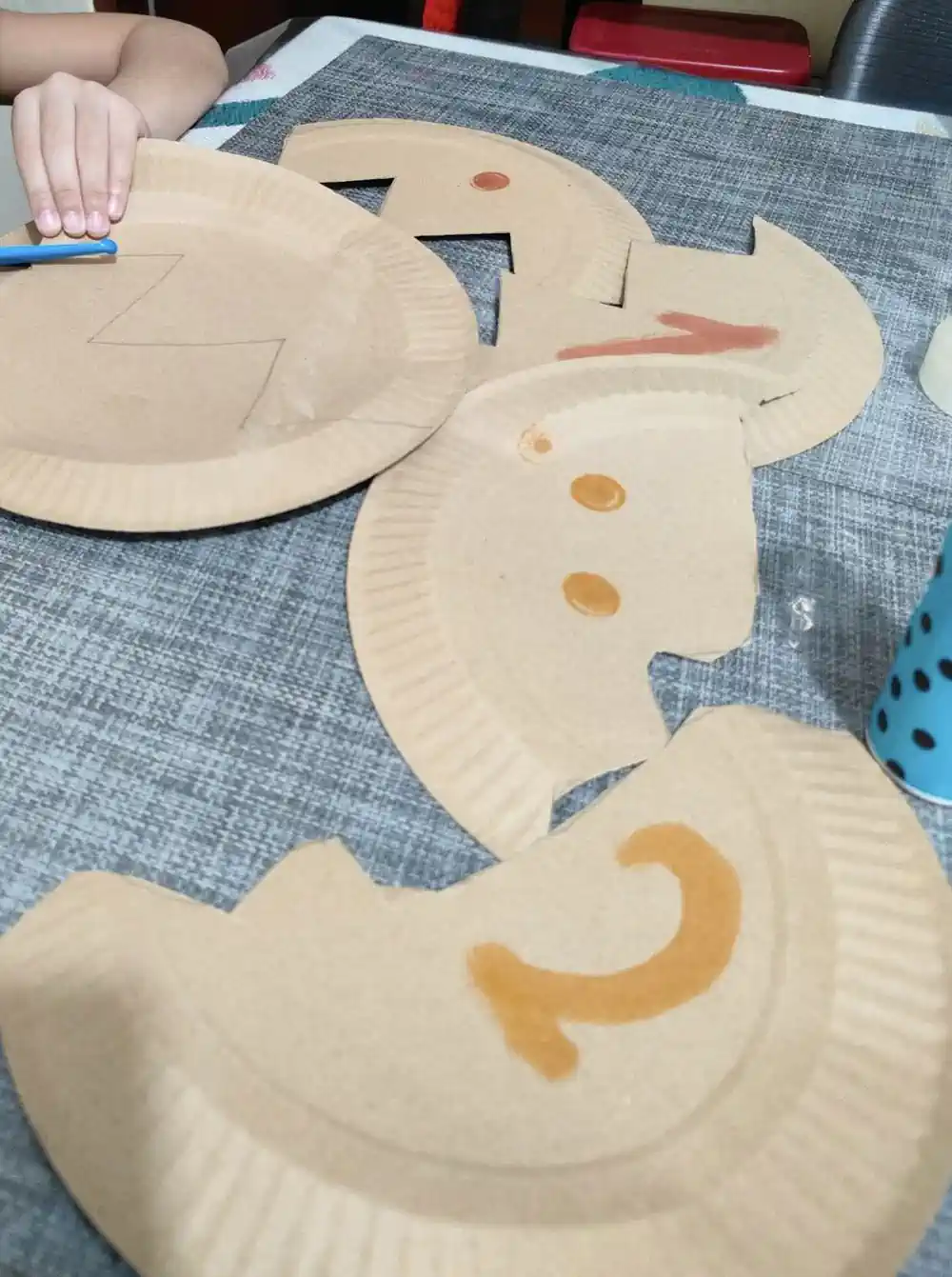
Then add a few free resources. We keep ours in one place on our free resources page, so you do not need to search all over the internet.
Step 4: How do we keep going, and when do we ask for help?
Keep it short and keep it daily. Ten minutes is plenty. Stop while it is still fun.
Write one line each day. Just one: what we did, and one thing we noticed. After a week or two, you will see small wins you would otherwise forget. You can keep these notes with our behavior tracking page.
For us, the improvement was obvious, and it helped us engage with our son more. Ask for help when:
- You feel something is not right, or your child is losing skills.
- You have been waiting a long time and nobody has called back.
- You feel stuck and want a professional to look at the whole picture. The Philippine Pediatric Society can point you to a developmental pediatrician, and the Hanen Centre has tips for parents in the meantime.
A licensed professional can assess, guide and give you a plan. Home practice is the hand you hold out while you wait for that.
What could one short session look like?
If you would like a shape to follow, here is one you could try. It is only a pattern, so change it to fit your child and your day:
- Settle (one or two minutes). Sit together, calm and close, with no pressure.
- Play (five minutes). Use one tiny goal and one simple item from the kitchen.
- Stop (one minute). End while it is still happy, and say something warm like, “That was fun.” Our son says it himself at the end of every game.
Do not worry if it falls apart some days. It will. A child who is tired, hungry or upset will not want to play, and neither would we. On those days, a hug and a snack is a good session too. Try again tomorrow.
Here are three small mistakes we’ve learned:
- Doing too much at once. One goal is better than five.
- Going too long. Ten minutes of happiness beats thirty minutes of tears.
- Comparing. Another child’s week is not yours. Your child’s small win is the one that counts.
If you would like a gentle starting point, our free guide has the steps in one place. You do not have to do everything at once. One small start is enough for today.
Common questions
Can home therapy replace a therapist?
No. It supports your child at home while you wait or in between visits. A licensed professional can assess and guide you.
How long should I do it each day?
A few minutes. Short and happy is better than long and tiring.
Where can I find free resources?
Start with our free resources page and the free guide.
Want a gentle next step?
Our free 14-day guide walks you through simple steps, one small day at a time.
Get the free guideRead next
- Waiting for an Assessment? 6 Ways to See How Your Child Communicates
- How to Help Your Child Talk More at Home Without Feeling Lost

Iryne is a mama and the creative force behind Somera Solutions. With a background in engineering and over 10 years of technical writing, she shares simple, gentle steps for families supporting a child’s communication and early learning at home. She and her husband, Marvin, homeschool their son on their farm in Kiblawan, Davao del Sur, The Philippines.