
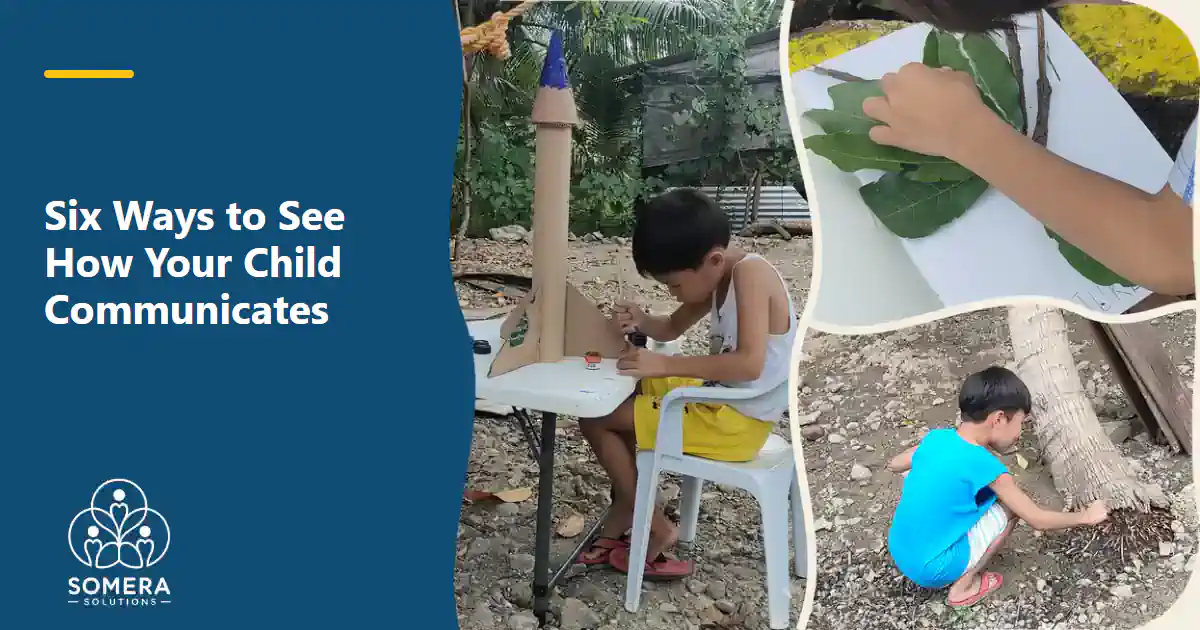
Noticing one thing about your child’s play can show you where to start.
How do I know how my child communicates? You can see it by watching how they start and respond in play: do they join in easily, need time to warm up, seem far away, answer with songs, share best while moving, or prefer playing alone? These six ways of joining in (the Joiner, the Slow Warmer, the Far-Away Child, the Singer, the Doer and the Solo Player) are a parent-friendly guide, not a diagnosis. A licensed professional can assess further.
Our six styles are our own home version, inspired by ideas from the Hanen Centre, a non-profit that teaches parents how to support early language. To learn more, read their book It Takes Two to Talk. This post is not a Hanen publication.
Why does waiting leave us guessing?
When we were waiting for therapy slots, we had a lot of questions and no one to ask.
What is our son trying to tell us? Is this normal? What should we do today?
Waiting is hard because the days keep coming. We still had to play, eat, and get through bedtime, with no one to tell us what we were seeing.
Looking back, here’s how we think of it: a porch light does not show the whole yard. It shows the next step. Noticing is like that. You don’t need the full picture. You only need the next step.
And here’s what we mean by “communication style”: it is how your child starts and responds when you talk or play with them. It is not a diagnosis. It is only what we can see in daily moments.
We’re parents sharing what has worked in our home, not medical professionals. This post is parent coaching from our own home and is not a replacement for a licensed professional. Every child is different. For an assessment or therapy planning, please talk with a licensed professional in The Philippines or where you live.
How do I know how my child communicates?
Just two things: how your child starts, and how your child responds.
Starting is when your child begins an interaction. They might hand you a toy, tug your sleeve, point, or say “look.” Responding is what your child does when you begin. They might look up, smile, take a turn, or answer.
You don’t need a notebook. A few quiet minutes of play is enough. Here are six ways to look. Watch your child at play and see which one sounds most like them.
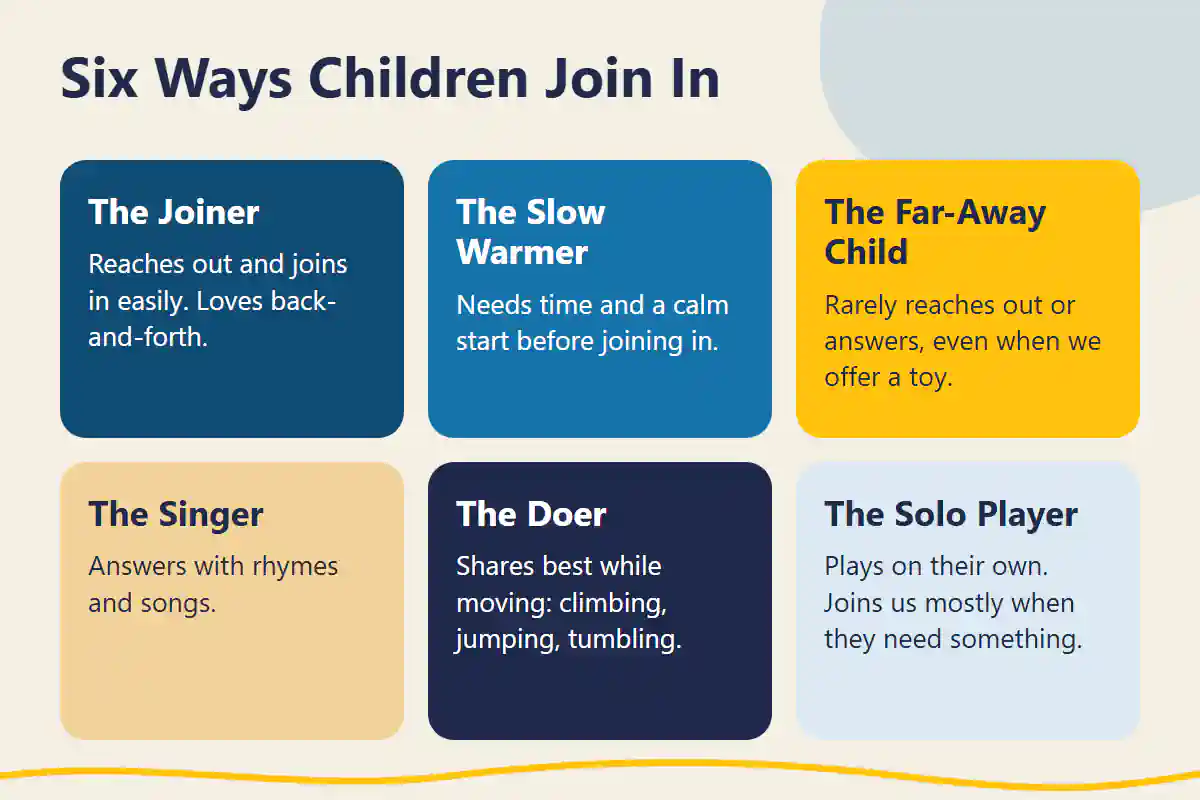
Style 1: Does your child start and join in easily?
This is the Joiner.
A Joiner reaches out and joins in easily. They smile, point and bring us things to show. They love going back and forth, so playing together feels easy, and we can usually tell what they want to share.
I noticed right away that our son is not this type.
Style 2: Does your child need time to warm up?
This is the Slow Warmer.
A Slow Warmer needs time and a calm start before joining in. They often answer more easily than they reach out. You may see them watch first, then join in once they feel ready.
Our son is somewhat this kind.
Style 3: Does your child seem far away?
This is the Far-Away Child.
A Far-Away Child rarely reaches out or answers, even when we offer a toy. They can seem far from the people and toys around them.
Please read this gently. It is a style we can notice. It is not a verdict about your child.
This was our son when we started home therapy.
Style 4: Does your child answer with songs?
This is the Singer.
A Singer answers with rhymes and songs. We ask a question, and our child sings back. Or they hum a favorite line instead of answering. A little tune can be the first doorway to connection.
When our son started echolalia, we noticed that he answered us with songs, like songs from Cocomelon. We would ask a question, and a line of a song came back. We learned to listen for the tune, because it was one way he was reaching out to us.
Style 5: Does your child share best while moving?
This is the Doer.
A Doer shares best while climbing, jumping and running. Movement is how this child thinks, learns and talks. Sitting at a table can be hard, but they often join in as soon as we move together.
Movement is how our son learns best, too.
Style 6: Does your child prefer to play alone?
This is the Solo Player.
A Solo Player is happy to play on their own. They may stay with one toy for a long time, and they join us mostly when they need something, like a snack or a favorite toy.
This is our son, 100%.
So where does our son fit?
Not in just one box. He is somewhat a Slow Warmer. When we started home therapy, he was a Far-Away Child. Later, he was a Solo Player, 100%. Slowly, he improved. Now he can tell us about some events, especially if he is interested.
That is the point. A style is a snapshot, not a label. It can shift as your child grows and as you practice.
Why does noticing matter while we wait?
Once you know your child’s style, you know where to start. You stop guessing and begin with one small step.
It also gives you something real to share. When the appointment finally comes, you can tell the professional what you have seen at home. Your notes are a great place for them to start, too.
You don’t have to get it perfect. Think of this as a first look, not a final answer.
What if my child shows more than one style?
Our son did, and your child might too. You may see a little of two styles on one day, and a different mix on another. That is okay.
Go with the style that shows up most, and keep watching. The scoring in our free guide helps you see which one that is. If two tie, take both and pick one small step from each.
What do we do with what we notice?
Our free guide has a 12-statement checklist. Score each statement 0 (never), 1 (sometimes) or 2 (often). Two statements belong to each of the six styles. Add up the two statements for each style. The style with the highest total (0 to 4) is your child’s main way of joining in. If two styles tie, your child shows both.
- Joiner: add a word or two to theirs. If they say “car,” you say “red car.”
- Slow Warmer: start calmly, then count slowly to 10 in your head and wait.
- Far-Away Child: give your full attention and follow what they look at.
- Singer: hum or sing back, and let their song become your first turn-taking game.
- Doer: move with them, and say the action word as you go, like “Jump!” or “Hop!”
- Solo Player: sit beside them, join their play and copy their action.
Please see a licensed professional for an assessment when you can. Bring what you noticed.
Download our free guide for the full checklist. You are already doing the most important thing: paying attention.
Common questions
Is a communication style the same as a diagnosis?
No. A style describes how your child starts and responds in daily moments. Only a licensed professional can assess or diagnose.
Can my child’s style change?
Yes. It can change as your child grows and as you practice small, connected habits.
Where do the six styles come from?
They are our own home version, inspired by ideas from the Hanen Centre’s books It Takes Two to Talk and More Than Words. This post and our free guide are not Hanen publications.
Do I still need an assessment?
Yes, when you can. This helps while you wait and gives you things to share with the professional.
Want a gentle next step?
Our free 14-day guide walks you through becoming a Connected Parent, one small step at a time.
Get the free guideRead next
- How to Help Your Child Talk More at Home Without Feeling Lost
- From Public School Plans to a Farm Classroom: How We Began

Iryne is a mama and the creative force behind Somera Solutions. With a background in engineering and over 10 years of technical writing, she shares simple, gentle steps for families supporting a child’s communication and early learning at home. She and her husband, Marvin, homeschool their son on their farm in Kiblawan, Davao del Sur, The Philippines.