
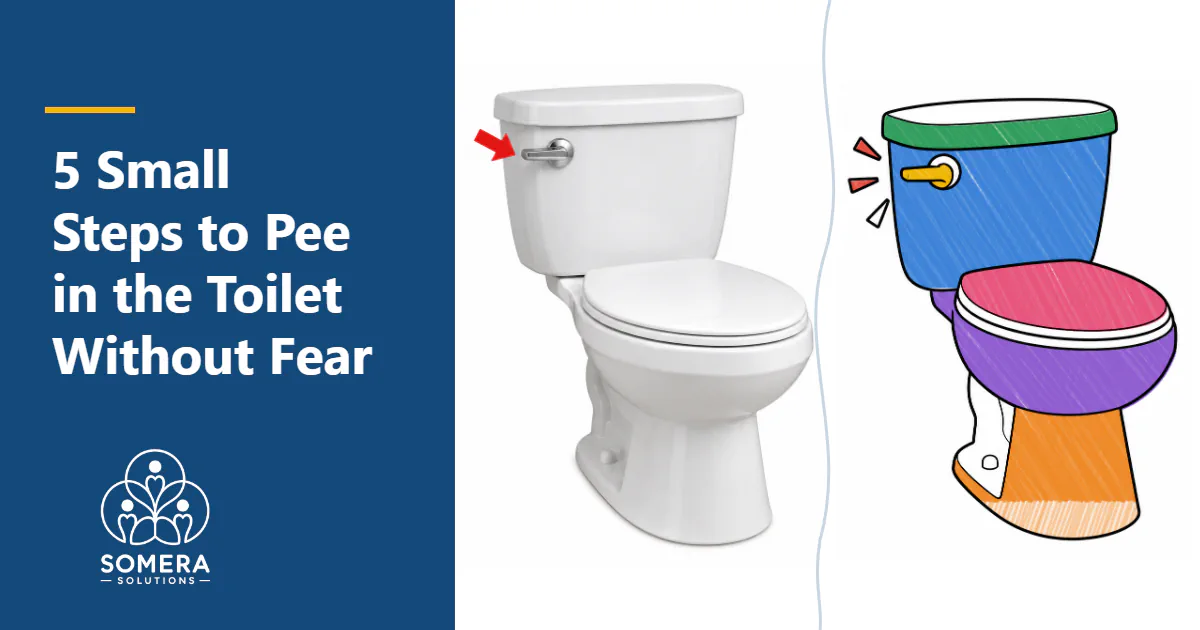
Your child hears the flush, and he doesn’t just flinch. He covers his ears, runs, and won’t go near the bathroom again. And you quietly wonder if he will ever sit on that potty.
We know that moment well. Our son was 3 years and 2 months old, and we were still living in Cebu, The Philippines at that time.
How do you help a child who is afraid of the bathroom pee in the toilet? We learned it works best in small steps. We watched his pattern, started each morning with a game, kept the bathroom door open, and counted 5 to 1. Then we moved step by step to sitting, standing, and flushing together. It took about two months, and we achieved what we wanted. This post is only about peeing. Pooping had its own path, and we will share it next week.
Step 1: How did we find out what our son was really afraid of?
At 2 years old, I took off his diapers, because I really wanted to be done with them. It did not go well. He cried, and he held his poop for days. He kept stopping himself. I became anxious, and I kept checking if he had pooped or if there were any signs. It became stressful that we postponed potty training.
At 3 years and 2 months old, after he was diagnosed with global developmental delay, the therapist tried to bring him to the bathroom to pee. He ran out and covered his ears. That was when we looked closer, and we saw he did the same thing at home for a long time.
I will be honest. I made a mistake. I saw the behavior, but I did not see the connections. We tried to force him to pee, and it would lead to a meltdown. Later, we realized that he feared the toilet flush. At the second therapy center, the therapist noticed the same fear. Instead of forcing him, the therapist suggested we help him slowly. We share other sounds that trigger meltdowns in our post on everyday sounds, which also answers why he would run out of the bathroom.
And our approach was exposure therapy. Think of it like a swimming pool. You don’t throw a scared child into the deep end. You start with toes at the edge, then ankles, then knees. That is how we treated the bathroom.
So, our first step was not the toilet. It was observing our son. At night he still wore a diaper. Only in the morning did we take it off. For 2 to 3 days, I watched how many minutes passed between his pees. That showed me his pattern.
Step 2: How do we make the bathroom less scary?
The bathroom still felt scary to him. So, every morning we started with a game called Bonding Rock. It comes from Tara Delaney’s book, 101 Games and Activities for Children with Autism, Asperger’s and Sensory Processing Disorders (McGraw-Hill, 2009).
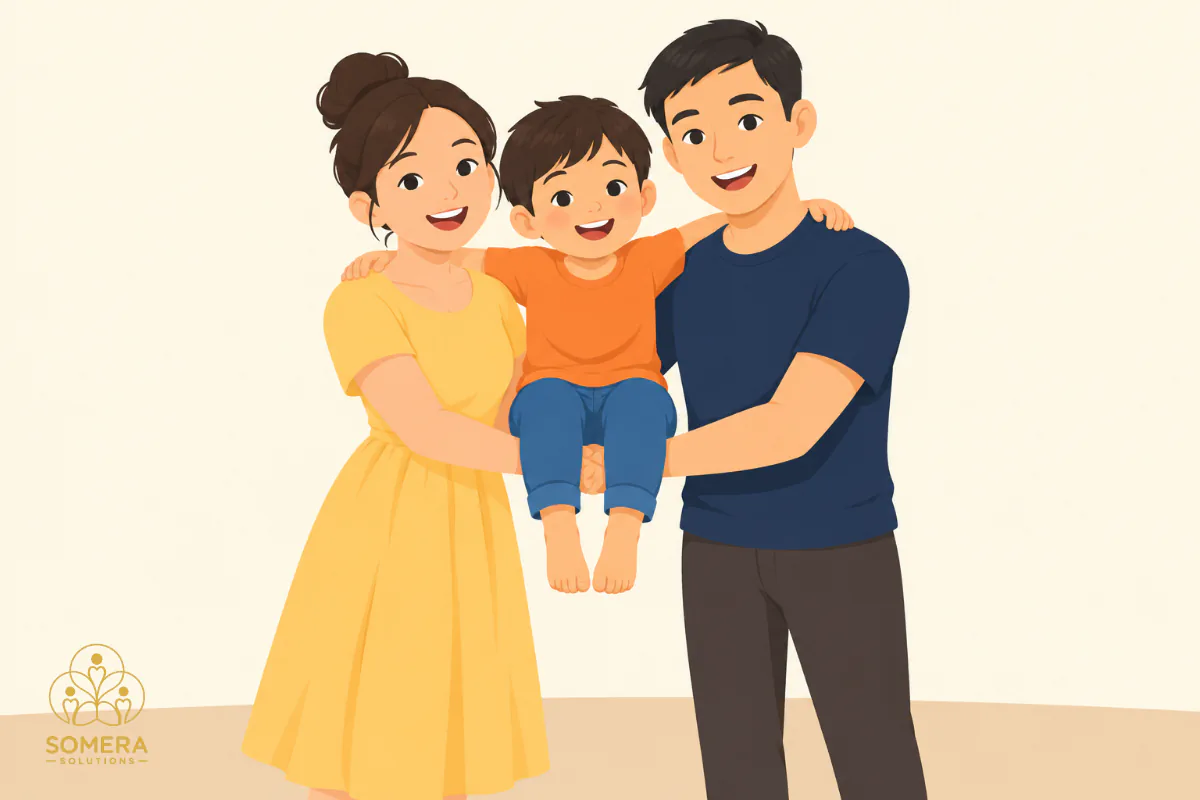
Marvin and I play it together, and our son is the center of attraction. It keeps him calm, and it makes him happy. We played it first, while his night diaper was still on. Then we took the diaper off and went to the bathroom. Some mornings, if he wanted, we swapped the order and went to the bathroom first.
We used very few words, in a first-then way: “First Bonding Rock, then bathroom.” Then, following his pattern, I brought him to the bathroom every 30 minutes through the day. I brought him whether he would pee or not. We kept the bathroom door open, and we counted, 5, 4, 3, 2, 1. We ran this for 2 weeks.
I still remember the feeling when we were in sync. We went into the bathroom, and he peed inside. Not on the toilet bowl, but inside. That was already a win.
Step 3: What if my child won’t sit on the toilet?
We let him draw and color the toilet bowl first. I know it is odd, but that was the easiest idea that came to mind. After a few days, we let him sit. We put a small stool under his feet, so they would not hang. A stool also helps a child’s muscles relax.
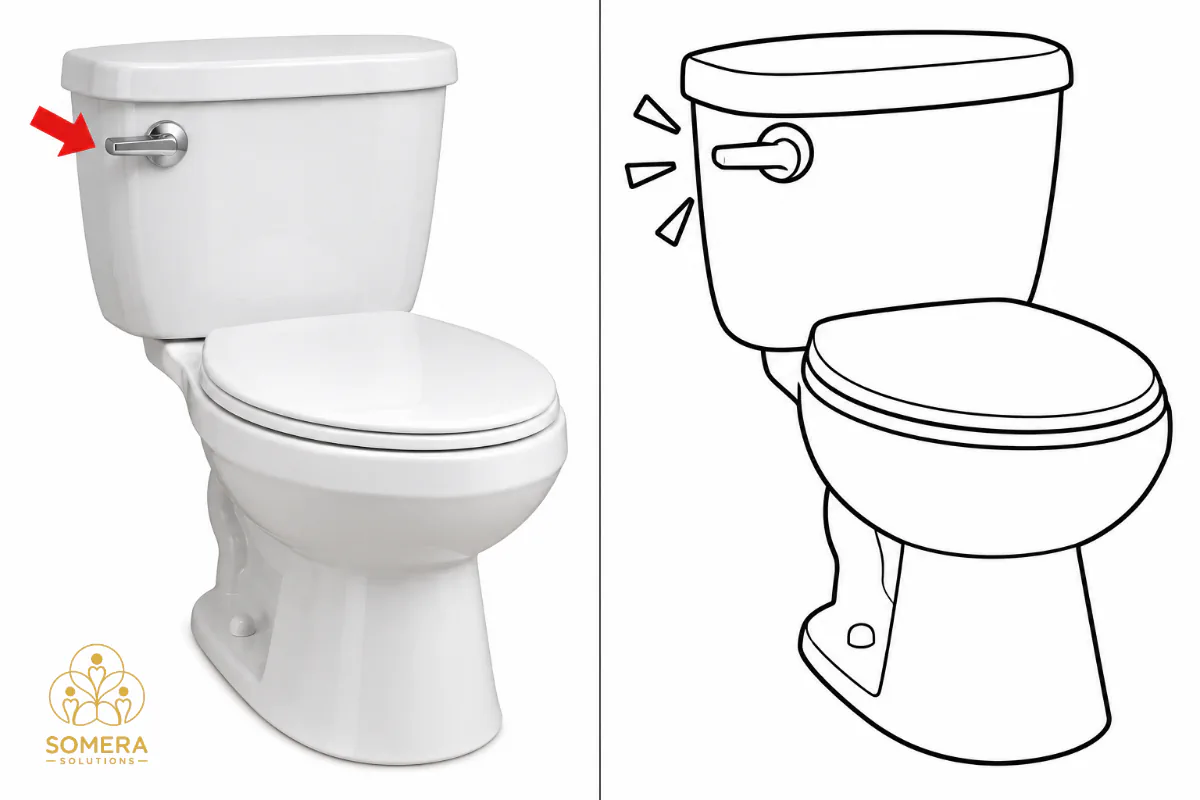
We counted 5, 4, 3, 2, 1 while he sat. Then, little by little, we grew the count, all the way up to 50 to 1. Somewhere between 5 and 50, he started to pee while sitting. When he first peed in the toilet bowl while sitting, I was so happy. It was messy, but it was worth it. I told him I was happy. He had no reaction, but he looked down, and he seemed quite amazed. That was when I taught him the word “pee.” Later we built the sentence, “I want to pee.”
Step 4: How do we help my child meet the flush?
Next, we let him sit facing the tank, counting 5 to 1, and later 50 to 1. We wanted him to learn about the flush and even play with it. He was scared to even touch the flush first. The toilet flush was one of the five everyday sounds that made him cover his ears. You can read that story in our post about five everyday sounds. The same counting helped us there, too. Our activity on coloring the actual toilet bowl worked magic.
Step 5: How do we move to standing, peeing and flushing together?
When he was comfortable, we let him stand, holding himself, and counted 50 to 1. Then we taught him to pee standing.
When he could do that, we started flushing together. I put my hand on the flush, and he joined me, hand on hand. Sometimes we just held hands. It sounds easy, but it was not smooth at first. There were tears, and there were screams.
It took about two months until he could pee in the toilet without fuss. Then a new thing showed up: he became fixated on flushing and kept flushing again and again. We did not stop him right away. We let him flush five times on the first day, counting 5 to 1. The next day we allowed four flushes, and we kept counting down. In the end, we turned off the flush and taught him to use a pail of water instead.
For pooping, we had to work on his picky eating and his water intake. We will share that story next week.
What did we learn after two months?
In all, it took about two months. After those two months, we took his night diaper off completely and began teaching him to pee before going to sleep. Looking back, three things helped most. First, we watched before we asked. His pattern told us when to go. Second, we used a game and very few words, so the bathroom felt like part of a happy morning. Third, we counted, and we let the count grow slowly.
This is what we chose for our son. Every child is different, so a pediatrician can guide you for yours. The Philippine Pediatric Society’s Parents’ Corner is a good place to start. The American Academy of Pediatrics’ toilet training toolkit shares similar ideas, such as a stool for the feet, regular sit times, and flushing later if the noise upsets your child.
Here is a gentle way to begin this week. Watch for two or three days and notice how many minutes pass between pees. Start the morning with a game you enjoy together. Then step into the bathroom with the door open, and count to five. Stay inside for a bit. That is a real first step.
If your child covers his ears and runs, you are not behind. You are at the edge of the pool. Start small. Keep the bathroom door open. Count to five.
Our free guide and our free resources page can help you get started. If you want to build your own plan at home, our post on how to start home therapy shows how we began, one small step at a time. If you want to know more about pee training and potty training, I also wrote in Medium.
Common questions
What if my child is afraid of the flush?
Keep the bathroom door open and let him meet the flush slowly. We let our son sit facing the tank and play with it, counting down, before we flushed together, hand on hand.
How long does it take to teach a child to pee in the toilet?
For us, it took about two months until he could pee in the toilet without fuss. Every child is different.
Should I force my child to sit on the toilet?
We did not. At the second therapy center, the therapist suggested we help him slowly instead of forcing him. A licensed professional can guide your own child.
Want a gentle next step?
Our free 14-day guide walks you through simple steps, one small day at a time.
Get the free guideRead next
- How to Encourage Eye Contact at Home Without Forcing It
- How to Help Your Child Talk More at Home Without Feeling Lost

Iryne is a mama and the creative force behind Somera Solutions. With a background in engineering and over 10 years of technical writing, she shares simple, gentle steps for families supporting a child’s communication and early learning at home. She and her husband, Marvin, homeschool their son on their farm in Kiblawan, Davao del Sur, The Philippines.