
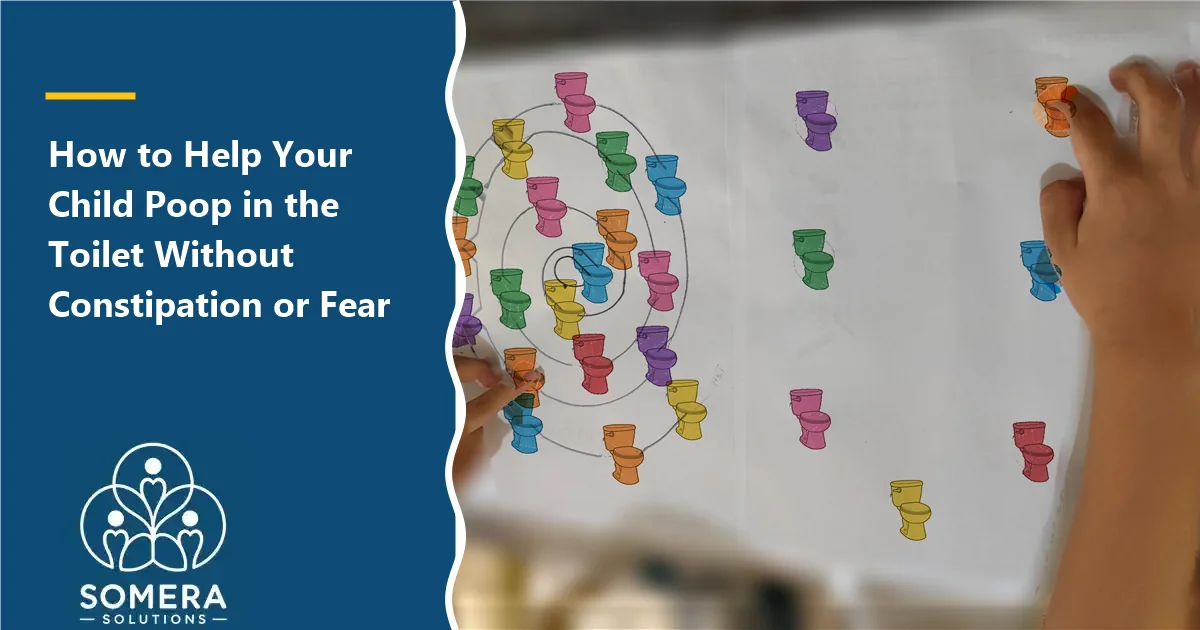
He knew the word. He could say “poop” and “poo-poo,” and he even showed us the signs. But then he asked for a diaper.
We had just won the pee battle. Our son was peeing in the toilet, and we thought pooping would follow. It did not. If your child holds poop, asks for a diaper, or cries when it is time to go, you are not alone. We have been there. Here is what we did over six months, one small step at a time.
Our son held his poop for days. Constipation and picky eating were part of the reason, so we fixed the food first. We started with eggs, made drinking water less scary, and then used the same steps we used for peeing. It took about six months, and every small step helped.
Why was pooping harder than peeing?
When our son learned to pee in the toilet, we felt we had cracked the code. We shared that story in our post on five small steps that helped our son pee in the toilet. So we thought pooping would be the same.
It was not. Every time he showed signs of pooping, he asked for a diaper and went in it. Sometimes he held his poop for days. He cried, and we became anxious. We made several trips to the ER, and the suppository ordeal was painful to watch.
Slowly, we saw two things in the way. The first was his picky eating. The second was that he drank very little water. Both can make poop hard to pass. And a child who has passed hard poop once will often try to avoid it again.
The picky eating had a long story behind it. When he was five months old, he passed blood in his stool. His pediatrician asked us to start a food elimination diet. We think, but have not confirmed, that this is where his picky eating began. Later, after he tried fried food, he wanted only fried and crunchy things. I thought it was already a win that he ate fried food, so I gave in. Looking back, that was one of my mistakes. No one was guiding us, so we had to find our own way.
This is our story, not medical advice. If your child has blood in the stool or constipation that does not go away, please talk to your pediatrician first.
How do you start when your child eats only a few foods?
We went back to the basics. We stopped giving him processed food, and we started with eggs.
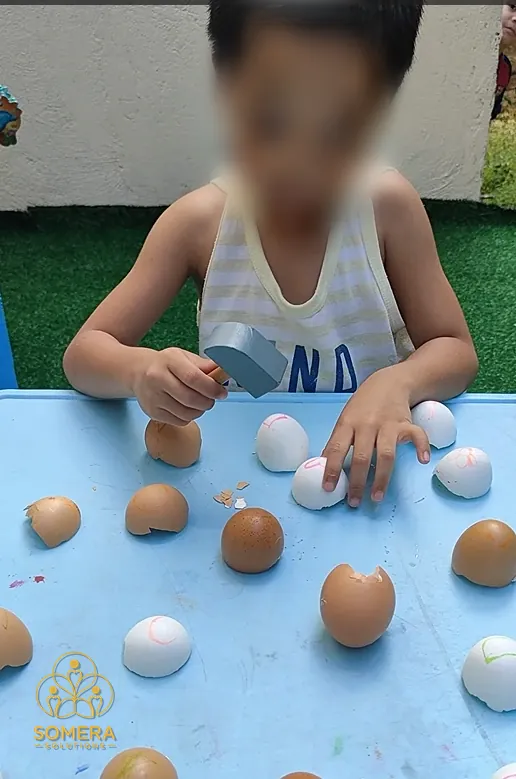
But we did not start with eating. We started with play. We colored eggshells and named the colors. He tapped the shells with a small hammer. He stuck bits of eggshell onto an egg-hatching chick craft. For a while, eggs were for touching, coloring, and laughing. Eating came later.
We also set up a routine with steps, and he followed them. He bought the eggs at the neighbor’s store, crafted with the shells, and cooked the eggs. Eating came last. At first, he only did the steps and ate his usual crunchy foods. Little by little, we added smell, then touch, and only then did eating follow.
Think of it like a ladder. You do not jump to the top. You stand on one rung until your feet feel steady, and only then do you step up. That is how we treated every new food. This was our egg ladder:
- Rung 1: Sunny side up, egg whites only. He ate the whites without the yolk.
- Rung 2: Scrambled egg. Once the whites were easy, we moved on.
- Rung 3: Sunny side up, with the yolk. Once scrambled egg was no problem, he started eating this too.
Each rung took as long as it took, and we did not rush.
What came after the eggs?
Once eggs were safe, we moved on to more foods, in the same slow way.
- Tortang talong. This Filipino eggplant omelet was a new vegetable wrapped in a food he already liked.
- Law-oy soup. This Filipino vegetable soup was our first real step into vegetables.
- Corn grits and corn crisps. We offered these as an alternative to rice.
Not everything worked, though. Foods with mixed colors were hard for him. When we tried chicken adobo or pork adobo, he gagged just by seeing it. Chicken curry was the same. So we stayed with clear soups, like chicken tinola and fish tinola, and we left the colorful dishes for later.
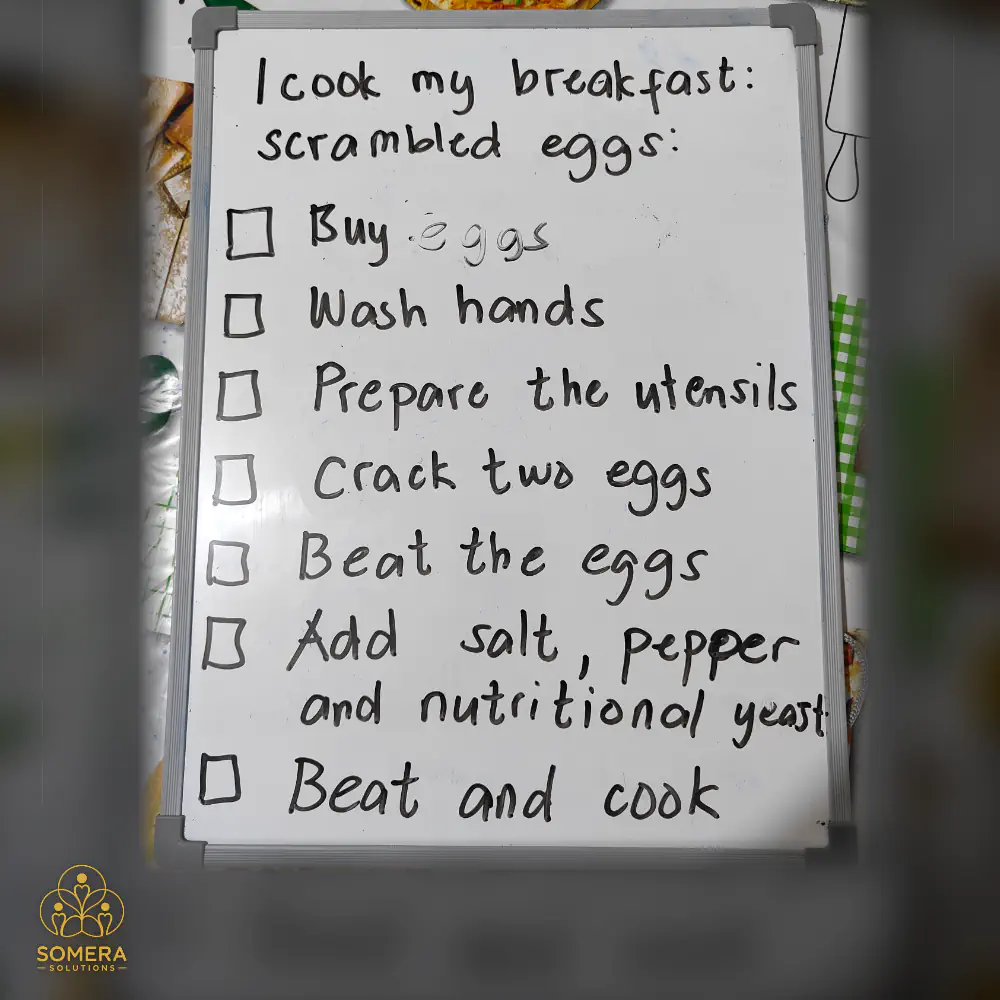
Later, he even helped cook his own scrambled eggs. We wrote the steps on a whiteboard, and he ticked each box as he went. Buy eggs. Wash hands. Prepare the utensils. Crack two eggs. Beat the eggs. Add the seasoning. Beat and cook.
All of this happened at the same time as our work on the water dispenser, which was hard for him because of his sensory issues. The pooping part took about four more months. As the food got easier, he was no longer constipated.
How did we make drinking water less scary?
Food was only half of it. He also drank very little, and he would not get water on his own. He waited for us to hand him a cup. The water dispenser frightened him, as we shared in our post on sounds that cause meltdowns.
So we played with it. We made a coloring page of the dispenser, and he colored it in. Soon he walked up to it and got his own water.
Then came a moment we still laugh about. We did not want him to drink cold water because he is still young. So we turned the cold tap off for a while. He found a way around it. He put a glass of water in the refrigerator, waited a few minutes, and took it out cold. Then he walked away laughing, as if he had won. And honestly, he had.
How did we move from the diaper to the toilet?
Peeing in the toilet came first, and that took about two months. After that, we added pooping, and that took about four more months. We worked on the food and the water at the same time. First, we watched. We noticed when he usually pooped until we knew his rhythm.
Then we did what we had done with peeing. We used the same steps, the ones we shared in our pee-in-the-toilet post. There was no new plan. We simply carried over the one that already worked.
The first time we sat him on the toilet to poop, he was very focused. He said “ew,” and he gagged, but he let us flush. We think the smell scared him a little. So we used a duck toy that made a sound to move his attention somewhere else.
In all, it took about six months. It was slow, and some days it felt like nothing was moving. But it was real, and every small step helped.
What is the one thing to remember?
If your child holds poop, look beyond the toilet first. Look at the food, and look at the water. Fix those with small steps and play, and the toilet gets easier.
Every child is different. This is what we chose for our son. If your child is not there yet, that is okay. Go back one rung and try again another day.
If you are not sure where to begin, our free guide has gentle steps in one place. Our free resources page has printable ideas to play with. Please talk to your pediatrician if you worry about constipation, blood in the stool, or feeding. Home play can sit beside that help. It does not replace it.
Common questions
Can picky eating cause constipation in children?
It can play a part. A short food list and little water can make poop hard. Every child is different, so please check with your pediatrician.
How long did it take?
About six months for us. About two months were for peeing, and about four months were for pooping. We worked on food and water at the same time. Your child may take more or less time, and that is okay.
Where do I start if my child eats very few foods?
Pick one food your child already accepts, and make it play first. Touch it, color it, tap it. Eating comes later.
Want a gentle next step?
Our free 14-day guide walks you through simple steps, one small day at a time.
Get the free guideRead next
- How to Teach Your Child to Blow Out a Birthday Candle Without Frustration
- How to Start Home Therapy Without a Therapist or a Big Budget

Iryne is a mama and the creative force behind Somera Solutions. With a background in engineering and over 10 years of technical writing, she shares simple, gentle steps for families supporting a child’s communication and early learning at home. She and her husband, Marvin, homeschool their son on their farm in Kiblawan, Davao del Sur, The Philippines.