
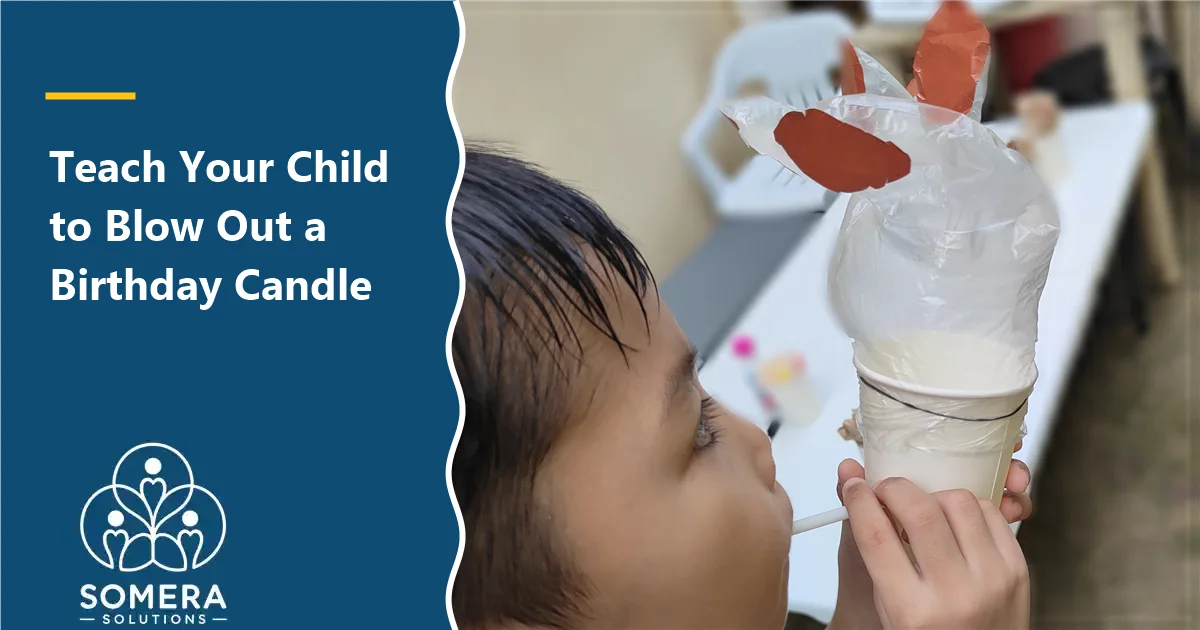
Blowing out a birthday candle looks easy, until your child cannot do it.
Ours could not. He wanted to blow the candle so much. But he breathed in instead of blowing out. And when we tried bubbles, he waved the wand through the air and waited for the bubbles to come on their own.
How do you teach a child to blow out a candle when he breathes in instead of out? Practice the air first, one tiny step at a time. We started with blowing bubbles, then blowing soft balls, then blowing a homemade chicken toy (a paper cup with a plastic glove on top that puffs up when he blows). Then we went back to the candle. It took us about two months, and remember, every child is different.
Why did our son cry over a birthday candle?
At two years old, our son cried at a birthday party. Everyone was blowing out the candle, and he wanted to blow it too. He could not. Instead, he did the opposite and breathed in.
At first, we did not think it was a big deal. After all, he was only two.
At three years old, the same thing happened at his school birthday party. Then we saw it with bubbles too. He did not blow. He whisked the wand through the air so the bubbles would come, which defeats the purpose of bubbles.
If your child does this, he is not doing it wrong. Blowing out is a skill, and some children need to be shown how.
Why did we wait, and does it matter?
We saw the problem early. But we only started working on it two months before his fifth birthday. To be honest, there were so many things that we were dealing with, behaviors, sensory issues, so we decided to deal with blowing candles and bubbles when he was older.
The good news is that it still worked. Two months of small, playful practice was enough for our son. Your child may need more time, or less. Every child is different, and there is no deadline you have missed.
What does “practice the air first” mean?
Think of a pinwheel. It only spins when the air goes out, not in. A candle works the same way. The flame is the easy part. The air is the hard part. If your child breathes in, or only waves the wand, no air goes out to push the flame or the bubble.
So, we stopped asking for the candle. We started practicing the air, in three small, playful steps: bubbles, soft balls, and a chicken toy.
What did we practice, one tiny step at a time?
Here is what we used, in this order. You can borrow any of it.
Step 1: Blowing bubbles
Bubbles are exciting, so they were our starting point. Hold the wand near his mouth, show him how to blow out slowly, and let him copy you. Keep it short and playful.
Step 2: Blowing soft balls
Next, we practiced blowing out to move a soft ball. Choose a ball that is too big to swallow and stay close. Then use a straw and aim at the soft ball. Start with one, and add more balls as you go.
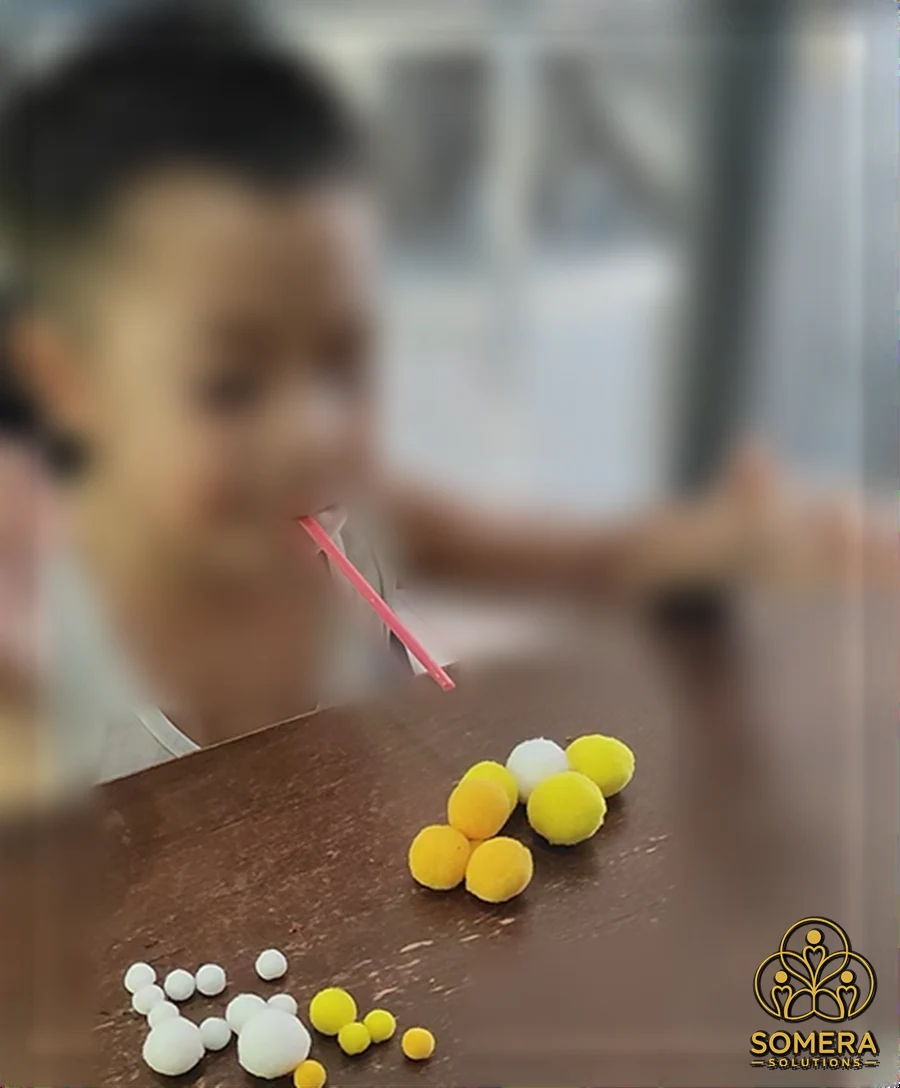
Step 3: Blowing the DIY chicken toy
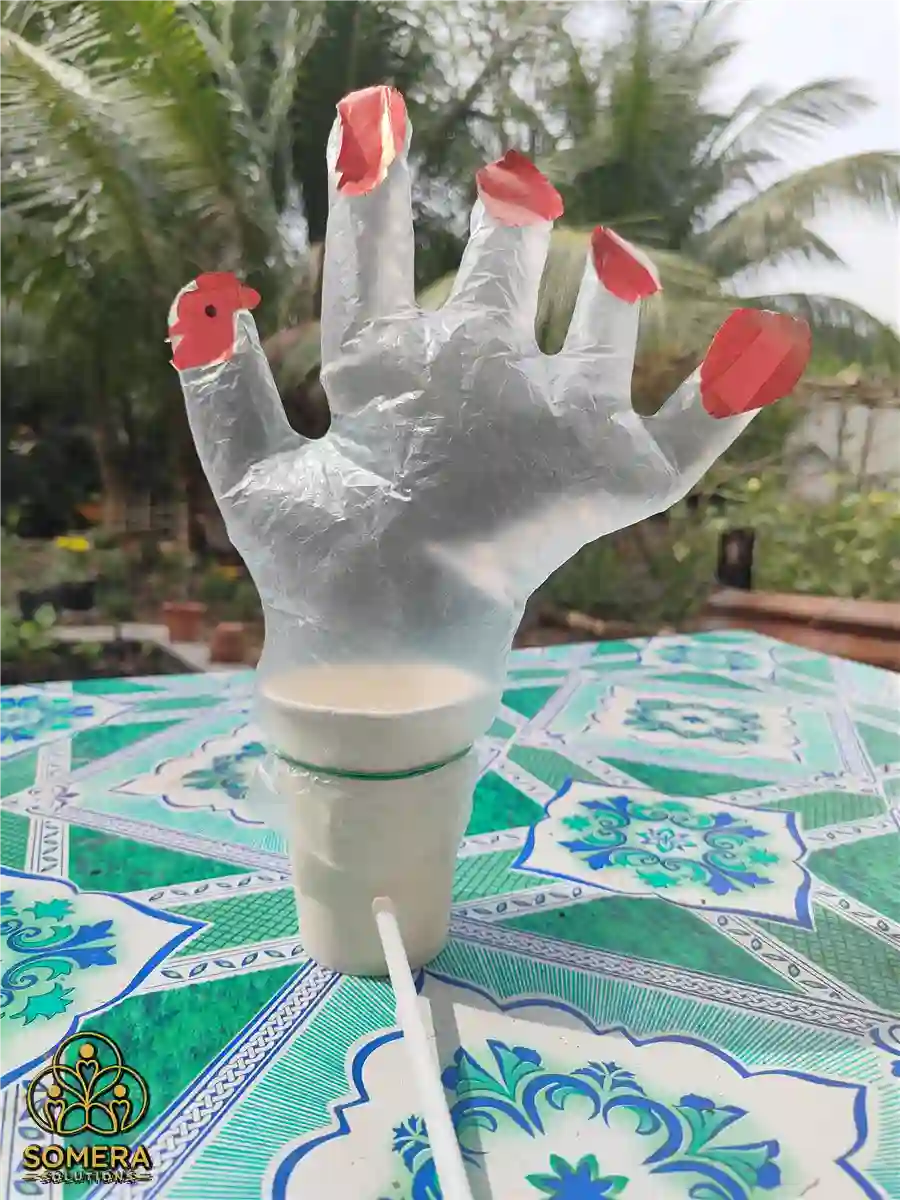
For this one, we put a plastic glove over the top of a disposable paper cup and held it in place with a rubber band. After that, we added a straw and stuck chicken artwork on the glove. When our son blew through the straw, the glove filled with air and the chicken puffed up. As a result, he could see his own air, and he learned that he has to blow out to make the chicken grow.
Then the candle
When the bubbles, the soft balls and the chicken were easy, we went back to the candle. Remind him of the chicken, and ask him to blow out the same way.
A few tips if you try it
Each step was tiny, so here are a few things we would suggest:
- Show your child how. Blow out slowly in front of him and let him watch, then let him copy you.
- Keep it short and playful. A few minutes is plenty. Stop while it is still fun.
- Go back one step if he gets frustrated. There is no rush to move on.
- Cheer for the small wins, like the chicken puffing up a little. A little is a real win.
Keep small items away from young children, because small balls and other round objects can be a choking risk. Nationwide Children’s Hospital has a simple guide to choking prevention. If you make the chicken toy, stay beside your child and keep the glove attached to the cup, because loose plastic should never go near a child’s mouth. Bubble solution is not for drinking, so stay close, and call your doctor if your child swallows a lot or seems unwell. If you use a birthday candle to practice, hold the flame well away from your child and never leave a lit candle alone with him.
What happened, and what if your child is not there yet?
It took us about two months. After the bubbles, the soft balls and the chicken, we went back to the candle. On his fifth birthday, he blew out the candle successfully. Then again on his sixth, and at every birthday party we have been to since. When we celebrate my birthday or his papa’s, he blows right along with us. It is a big win for our family.
Every child is different. This is what we chose for our son. If your child is not there yet, that is okay. Try again another day, make it shorter, or go back one step.
One honest note. Blowing games are not speech therapy. A review of the research by McCauley and colleagues found weak evidence that blowing and other mouth exercises improve speech sounds. We did this so our son could join the birthday fun and blow out the candle, not to treat speech.
If you are worried about your child’s breathing, feeding or speech, please talk to a licensed professional, like a speech-language pathologist or a doctor. Home play can sit beside that help. It does not replace it.
Bubbles showed up in our home in another way too. Our post on how to encourage eye contact at home shows how we used bubbles for play and counting. If you are not sure where to begin at home, our post on how to start home therapy shows how we choose one small step at a time.
Start with one tiny step: the air. A few happy minutes at a time is enough. If you would like a gentle place to begin, our free guide has the steps in one place, and our free resources page has more ideas.
Common questions
Why does my child breathe in instead of blowing out?
We cannot say why for every child. Blowing out is a skill, and some children need to be shown how. If you are worried, please ask a licensed professional.
How long does it take to teach a child to blow out a candle?
It took us about two months of small, playful practice. Every child is different, so yours may need more time, or less.
Is blowing practice speech therapy?
No. Research on mouth and blowing exercises for speech is weak. We did it so our son could join in at birthday parties and blow out the candle.
Want a gentle next step?
Our free 14-day guide walks you through simple steps, one small day at a time.
Get the free guideRead next
- How to Help Your Child Talk More at Home Without Feeling Lost
- Waiting for an Assessment? 6 Ways Your Child Communicates

Iryne is a mama and the creative force behind Somera Solutions. With a background in engineering and over 10 years of technical writing, she shares simple, gentle steps for families supporting a child’s communication and early learning at home. She and her husband, Marvin, homeschool their son on their farm in Kiblawan, Davao del Sur, The Philippines.