
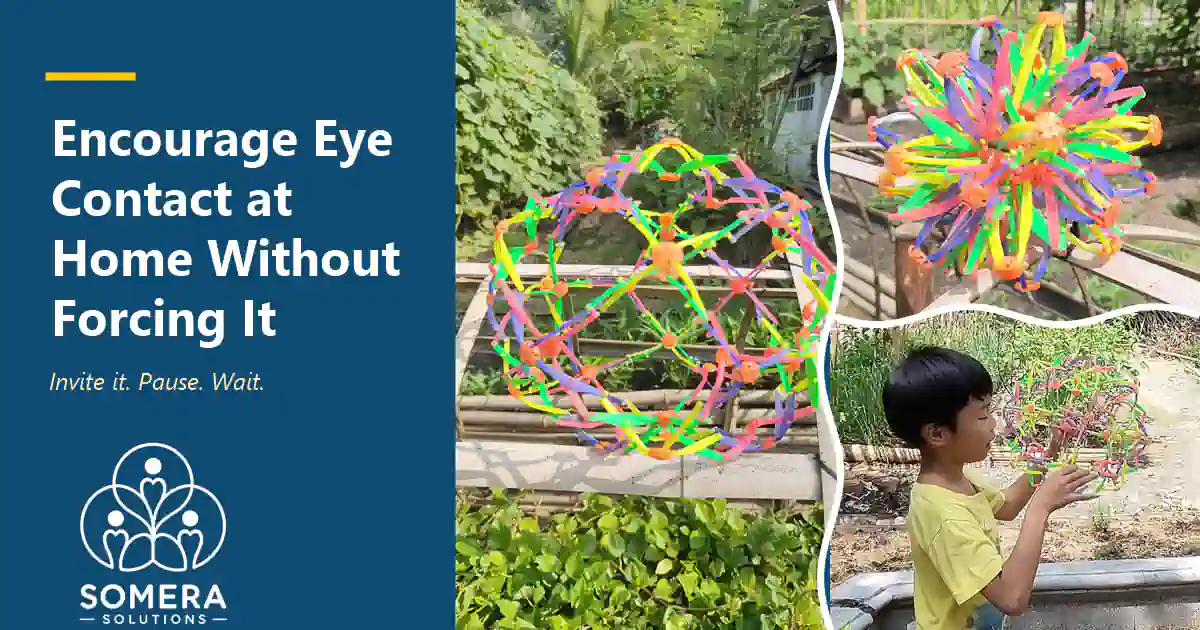
For a long time we kept saying “look at me,” “Look at Mama,” “Look at Papa,” and we couldn’t understand why it never worked.
I said it kindly. My husband said it loudly. We said it again, a little slower, as if he just had not heard us. Our son kept playing, and his eyes went everywhere except our faces.
How can you encourage eye contact at home? Invite it instead of demanding it. Play a short, happy game, pause, and wait for a glance before you continue. We used three simple toys: an expandable ball toy, a library bell and a bubble blower. Celebrate any glance, keep it short, and ask a licensed professional if you are worried.
Why did “look at me” never work for us?
We thought we were helping. In our heads the plan was simple: if he looked at us, he would hear us, and if he heard us, he would learn.
So we asked. “Look at me.” Then with a name first: “Look at Mama.” “Look at Papa.”
We even tried the phrase, “Look Mama in the eyes.”
What we noticed was the opposite of what we hoped. The more we asked, the less he looked. It felt like a small tug-of-war, and nobody was winning.
The Hanen Centre, which coaches parents of children with language delays, takes the same gentle route. Their parent tips say to get down to your child’s level, face to face, and then stop and wait. You can read their guide, Get Face to Face to Communicate!.
What does inviting eye contact look like?
Something changed when we stopped demanding and started inviting.
Think of a shy bird on a fence. If you run at it, it flies away. If you sit quietly and set out a few seeds, it may come a little closer. It might take a day or a week, but it comes on its own, and that is the whole point.
Eye contact worked the same way for us. We could not grab it. We could only make ourselves the interesting part of the room and wait. And by the way, the waiting is the hard part. I will tell you now, patience is indeed a virtue.
Here is what that looked like in our home:
- We made ourselves the fun part. We held the toy near our face, so the fun and our eyes were in the same place.
- We played a short, happy game.
- We paused. This was the hardest part. We stayed still and waited without saying a word.
- We celebrated any glance. A quick look counted. A look at our mouth counted too.
It was not quick progress. It took two weeks for him to respond. It needs a calm moment and tons of patience.
Toy 1: How did the expandable toy help?
The first toy was an expandable plastic ball. You hold it small, then pull it out to a medium size, and then to a large size. We learned the idea from Mary Barbera’s YouTube channel, which is full of simple, practical ideas for parents.
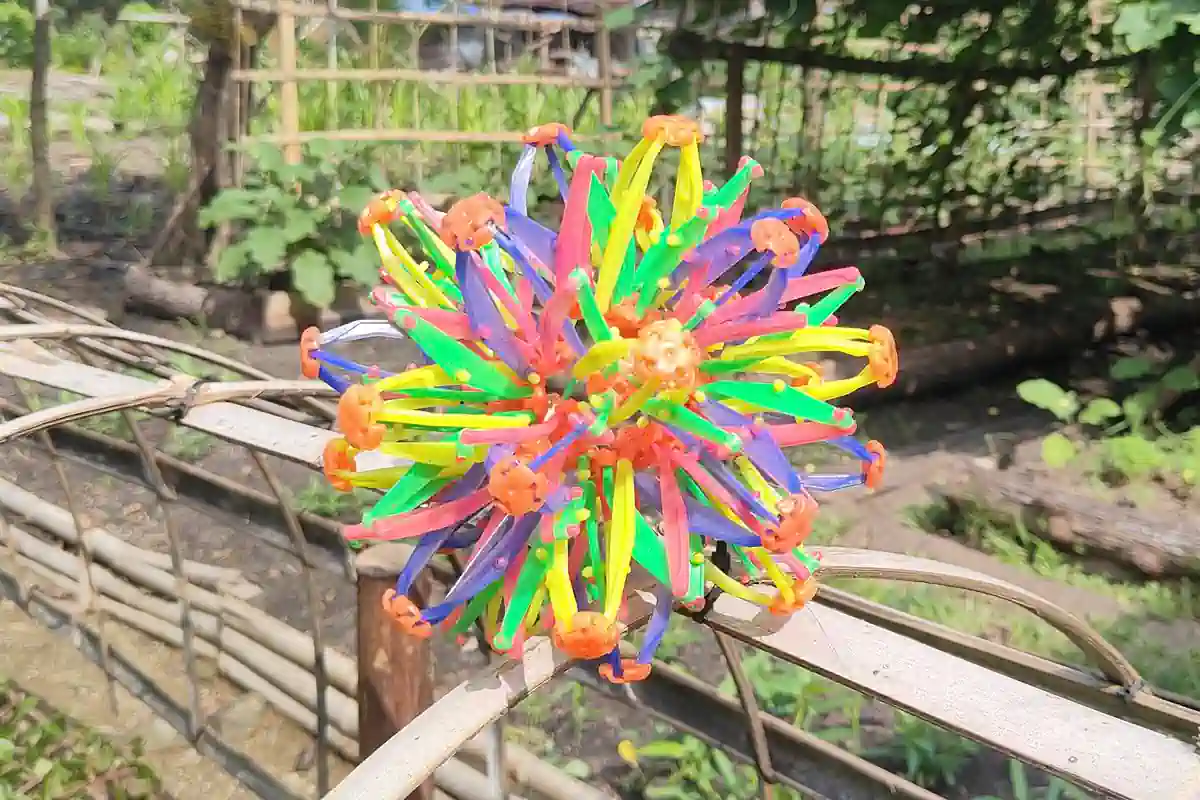
Here is how we used it. We held the toy in front of our mouth, expanded it, and said something. At first, we used his name. Sometimes it was a word like “Hello!”.
The expanding toy grabbed his attention right away. But he did not look into our eyes. He looked at our mouth first, as we said his name.
At first, we wondered if that was wrong. Then we saw it differently. His eyes had come to our face, and that was a start. Our mouth is part of our face, and our eyes were right next door.
I did this with our son, and I do it at random times.
I remember, we were about to sleep, and I grabbed the toy and said “Hello.” He looked at my mouth. Then he grabbed the toy and copied what I did.
Toys 2 and 3: How did the library bell and the bubbles help?
The second toy is the simplest one. It is a small bell, like the ones you see on a library desk.
Our son did not respond to his name, so we made a simple formula: Name + Bell. We said his name, then we rang the bell. He did not respond to his name, but he turned around at the bell. That was a win already.
Then we switched to Bell + Name. This formula worked wonders for us. He started to respond when the bell rang, and his name followed right after it. It was very effective for us.
Yes, he turns now. Eventually, we did not need the toys anymore. We stuck with Bell + Name, and later Name only. When it was his name alone, he took time to respond, so we waited.
The third toy is a bubble blower. There is no secret here. We just played and counted the bubbles together: one, two, three. There was nothing to get right, so there was no pressure for him or for us.
The bubbles became our instant connection. Bubbles are a happy thing to share, and a happy moment is a good moment to invite a glance.
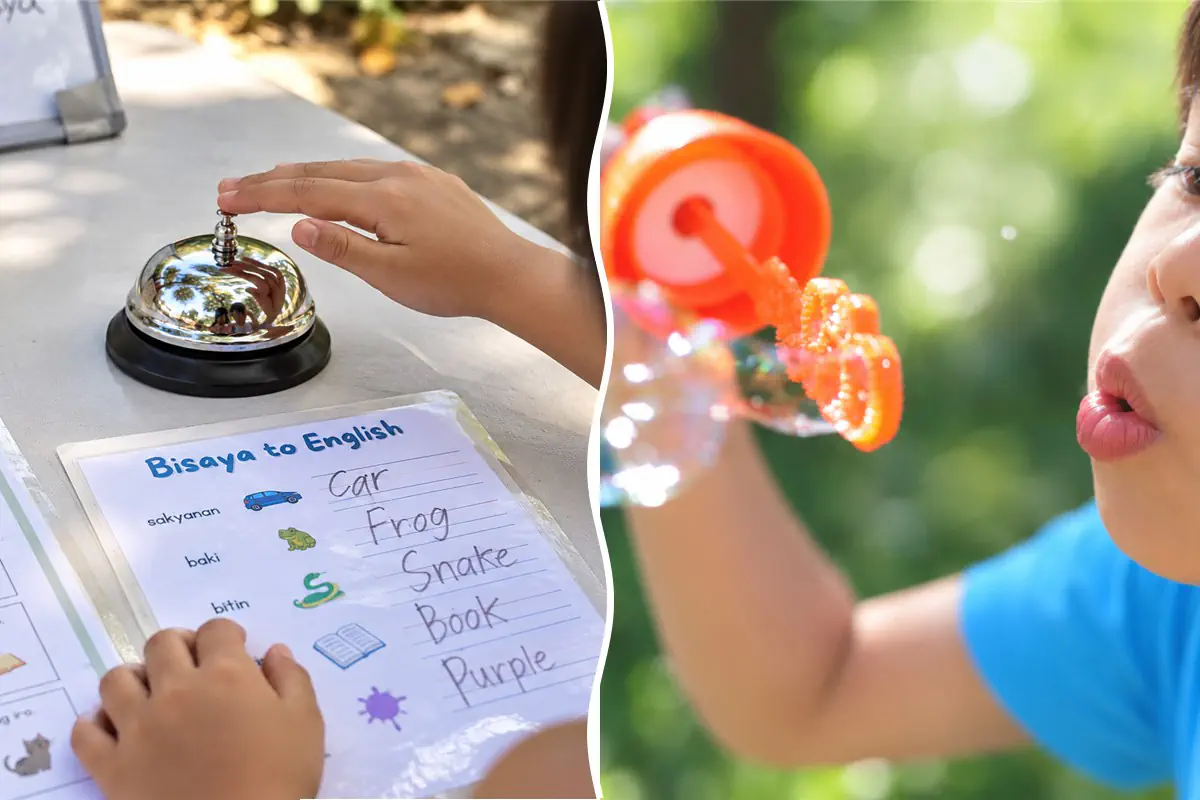
Then we hit a problem. He had trouble blowing. Instead of blowing air out, he took air in. It made us laugh, and it also made us curious about how to help him.
We did solve this one. Here is how we taught our son to blow out a birthday candle.
How do we fit this into our day?
You do not need a special time or a special room. Here is what helped us keep it light:
- Keep each session short. A few minutes is enough.
- Stop while it is still fun, even if you want one more to try. (I am guilty of this one. I tried the blowing part and insisted until he had a meltdown.)
- Choose a calm time, not a rushed or tired one.
- Celebrate any glance and keep your face warm and happy.
- Let one toy be the toy of the day, not all three at once. (And do not leave them within reach. We learned this the hard way.)
A small reminder: this is what we chose for our son, and it is parent coaching, not a diagnosis. If you are worried about your child’s eye contact, a licensed professional can look at the whole picture and guide you. We are only parents sharing what we do at home.
If you are still working on helping your child talk more, our post on how to help your child talk more at home goes well with this one. And if you would like simple steps in one place, our free guide is a good place to begin.
You are not failing if “look at me” did not work. We said it for a long time too. Maybe it is time to set out a few seeds and wait.
Common questions
Is it normal if my child does not look at me?
Children differ in how and when they make eye contact. If you are worried, talk with a licensed professional.
Should I keep saying “look at me”?
We found that inviting worked better than asking again and again. Try a toy, a pause and a smile instead.
How long should we play each time?
A few minutes. Stop while it is still fun.
Want a gentle next step?
Our free 14-day guide walks you through the tuned-in habit one small step at a time.
Get the free guideLooking for more? Browse our free resources or visit our shop.
Read next
- Waiting for an Assessment? 6 Ways to See How Your Child Communicates
- How to Help Your Child Talk More at Home Without Feeling Lost

Iryne is a mama and the creative force behind Somera Solutions. With a background in engineering and over 10 years of technical writing, she shares simple, gentle steps for families supporting a child’s communication and early learning at home. She and her husband, Marvin, homeschool their son on their farm in Kiblawan, Davao del Sur, The Philippines.