
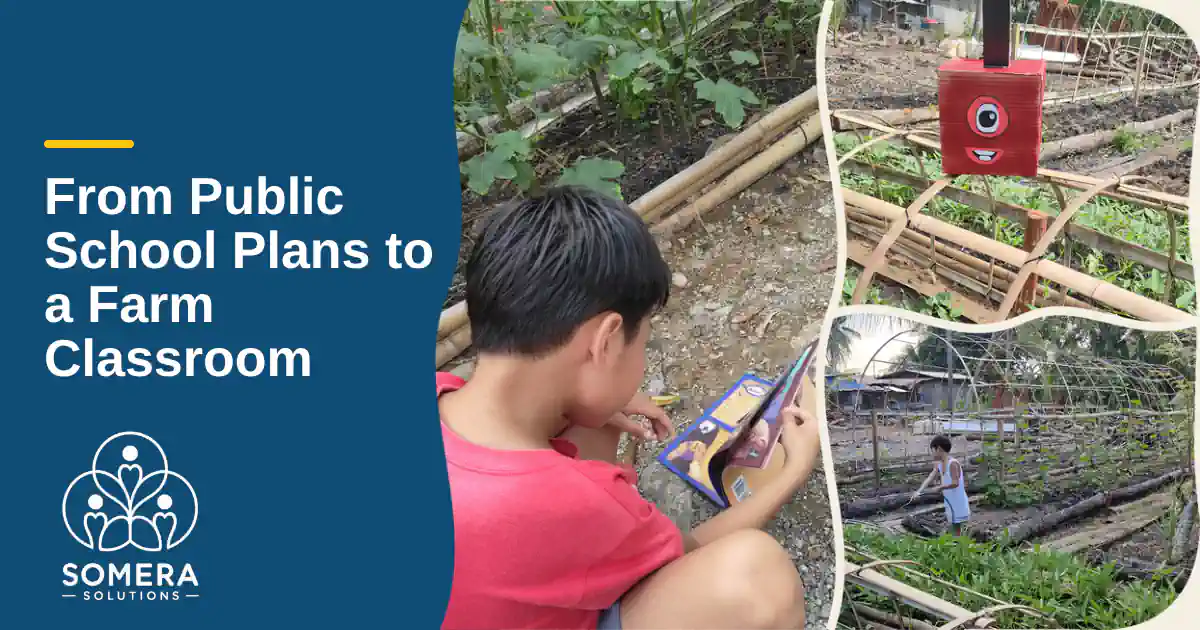
We almost did not homeschool. Everyone was heading to public school, and we thought it was our only road.
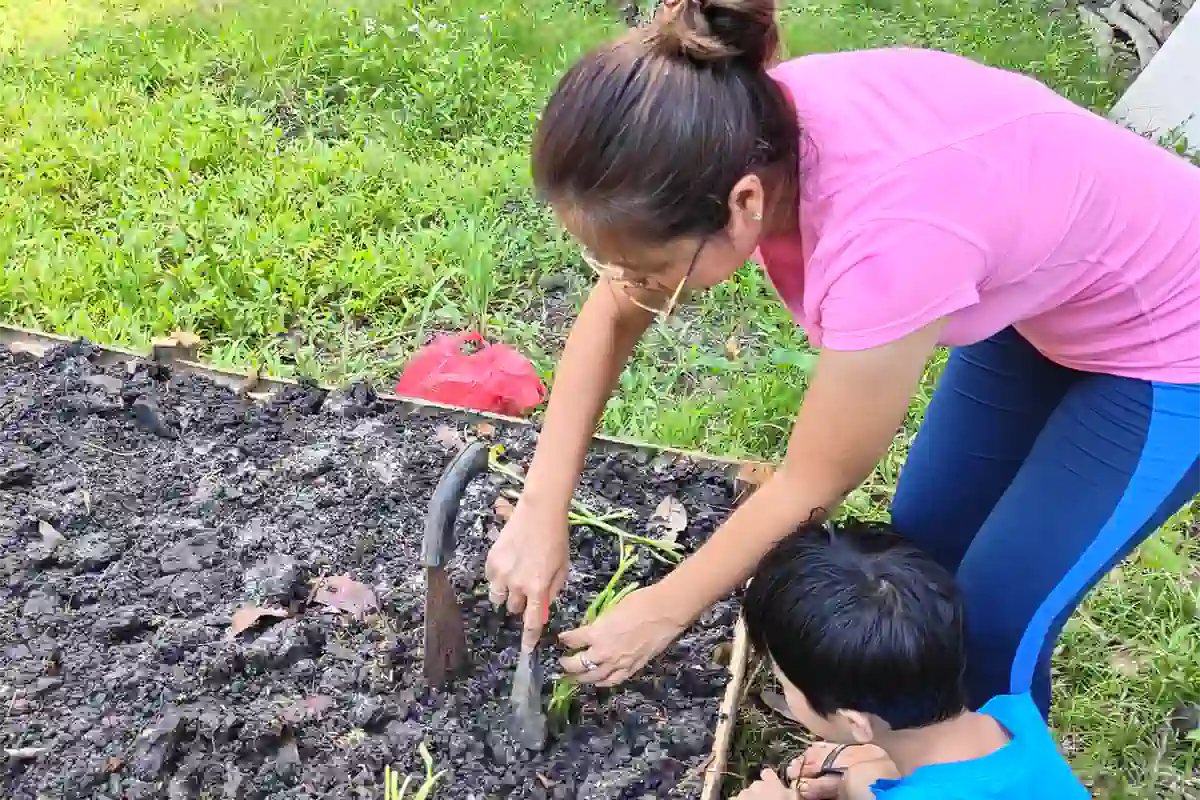
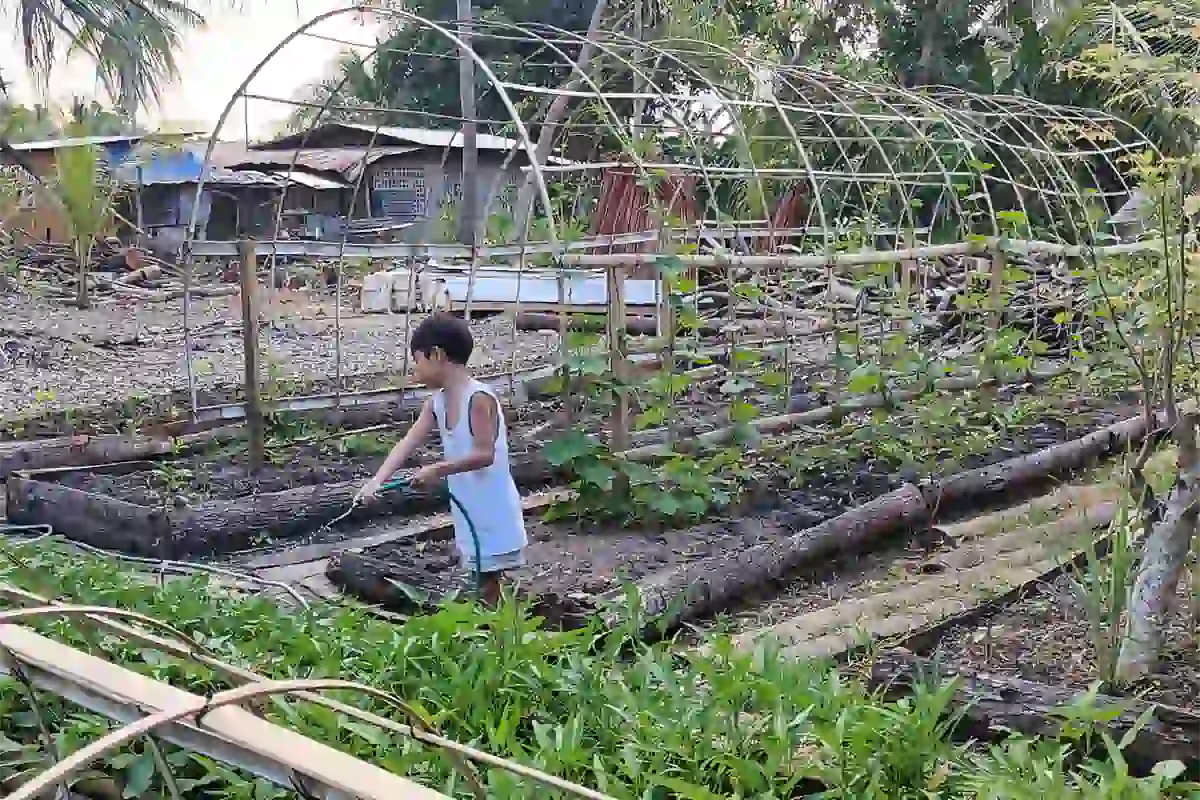
We started homeschooling the day we trusted a gut feeling that something was off and took our son home from public school on opening day. We had always wanted to homeschool, but the pressure to follow everyone else was heavy. This is how we went from a public school plan to a farm classroom in Kiblawan, Davao del Sur.
What did we plan before we started?
I always wanted to homeschool. For years, the idea sat in me like a seed in dry soil. I just had not found the right time to plant it.
For K1 and K2, our son went to an inclusive, play-based curriculum school. Then we decided to relocate to the province.
In the province we moved to, there was no private school. Sending him to a private school was not an option.
I was firm that we would homeschool. But I gave in to the pressure. Everyone around us was going to public school, and it felt like the only road. So that is where we enrolled him.
Maybe you know this feeling. You know what you want for your child, and you still follow the crowd, because the crowd looks so sure.
What happened the morning of June 8, 2026?
On June 8, 2026, I woke up around 3 a.m. It was not because I was excited for the school opening. I simply could not sleep properly. I was anxious about sending our son to a different setup. I knew that he is a kinesthetic learner, which means he learns best by moving and doing. He does not sit still for long, and he thrives in a play-based curriculum.
When we entered the school grounds, I realized I had not really prepared him. The other kids had neatly ironed uniforms, shiny black shoes and white socks. They were happy, and they were taking pictures at the photo booth. Our son was wearing a red shirt and flip-flops. I asked myself, “What was I doing?” I had not prepared for that first day at all.
We brought him inside the classroom. I told him to sit, but it only lasted about three minutes. Then he started to roam. He went to the teacher’s table and looked for pencils and chalk. He started writing on the blackboard. Then I saw the water dispenser and the kitchen sink, and all the things that could break if an active little one wandered around.
I can still remember my heartbeat. I felt dizzy. I knew this setup would not work for him. He would keep roaming, and he might have problems with his classmates.
So I asked the teacher what the activities would be that day. She said each child would have an assessment. I asked if I could take our son home and come back for his assessment. She agreed.
A few minutes after we arrived home, the earthquake happened. A magnitude 7.8 earthquake struck Mindanao that morning. Source: PHIVOLCS.
We trusted the feeling. We pulled him out of public school, and we started homeschooling.
What did our first week of homeschooling look like?
When we started homeschooling, that was the first time I could really relax. I did not pressure myself to teach him right away. The first week was mostly research. I had been reading about homeschooling for quite some time, but this week was purely parent learning, not student learning.
We were already doing a lot of home therapy activities, so doing a lot at home was no problem.
The first thing I did was study the method we use, which is Charlotte Mason. If you would like to start there too, you can use the virtual library we built on our homeschooling page, where the Charlotte Mason books are easy to find.
After that, I started working on his lessons. Charlotte Mason uses real books, reading and narration. Narration is a big challenge for us. So I decided to create a custom ebook about what our son was experiencing in the province for the very first time. Luckily, my creative mind works, and we created Little Adventures in Kiblawan, a series of five stories.
To this day, he is happy with these books, especially the Pink Carabao story. It is his favorite. In Kiblawan, there is a very rare albino carabao, and it is really pink. It was showcased at the Araw ng Kiblawan 2026 parade. Our son experienced the parade, and now he relives it through our books every day. It is part of his visual reading practice.
What did we learn from trusting our gut?
A gut feeling can be a signal to pause and look closer. It isn’t a prediction, and we don’t call it a sign or an omen. We only know that when we listened, we had room to look at what our son actually needed.
Is homeschooling really allowed in The Philippines?
Yes. It is a question many parents ask, so here is what we found.
DepEd runs a Homeschooling Program as an alternative way of learning. The rules are in DepEd Order No. 1, series of 2022. In plain words:
- Public and private schools can offer the program.
- The school head assigns a Homeschool Coordinator, who enrolls learners and supports parents.
- Parents or guardians monitor their child’s work and progress, and they are the main teachers.
What we have learned so far is that there are two ways to homeschool: with a provider, or independently. We chose a provider. With a provider, you can choose parent-led or teacher-led. We chose parent-led. We are still in our first year, and it is the best decision by far.
Rules can change, and steps can differ by school and region. Please ask your local school or DepEd office for the current steps. This is general information, not legal advice. Source: DepEd, Homeschooling Program (DepEd Order No. 1, s. 2022).
What would we tell a parent standing where we stood?
- You don’t need a perfect plan. Start small. Our first week was only research.
- You don’t need to copy a school day. Make a day that fits your child.
- You’re allowed to choose a different road, even when everyone else is on the same one.
You are not behind, and you are not alone. If you’d like routines to start with, visit Guides and Checklists on our free resources page. If home support for talking is on your mind, our free guide is there too.
We’re parents sharing what has worked in our home, not medical professionals or legal advisers. Every family and child is different. For an assessment or therapy planning, please talk with a licensed professional in The Philippines or where you live.
Common questions
Is homeschooling allowed in The Philippines?
Yes. DepEd Order No. 1, series of 2022 sets the rules for the Homeschooling Program. Please read the section above, then check with your local school or DepEd office for the current steps.
Where do we start?
Start with research, like we did. Read about the method you like, and join Facebook groups for homeschooling parents.
What if my child has a language delay?
What helped us: short, calm lessons and lots of talking in everyday moments. For individual guidance, ask a licensed professional.
Want a gentle next step?
Our free guide gives tired parents a calm place to start, one small step at a time.
Get the free guideRead next
- How to Help Your Child Talk More at Home Without Feeling Lost
- Waiting for an Assessment? 6 Ways to See How Your Child Communicates
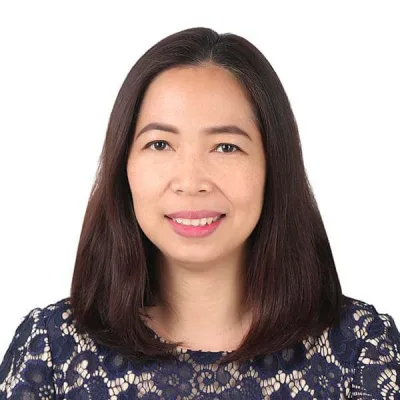
Iryne is a mama and the creative force behind Somera Solutions. With a background in engineering and over 10 years of technical writing, she shares simple, gentle steps for families supporting a child’s communication and early learning at home. She and her husband, Marvin, homeschool their son on their farm in Kiblawan, Davao del Sur, The Philippines.