
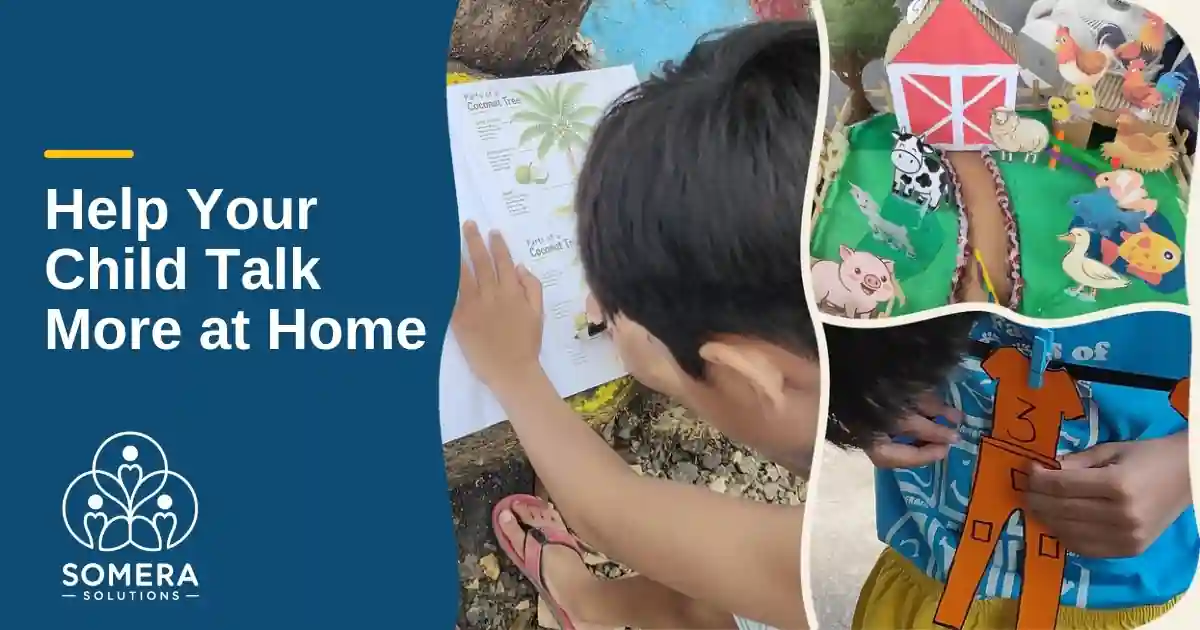
The question we get asked most is also the hardest: how do we do therapy at home?
You can help your child talk more at home by becoming a Connected Parent: notice what your child is doing, pause up to 10 seconds, follow their lead, add one or two words, and celebrate every try. These small moments happen at meals, in the car, and at bedtime. Home support works alongside, not instead of, a licensed professional.
Our free guide was inspired by the Hanen Centre, a non-profit that teaches parents how to support early language. Source: It Takes Two to Talk.
Why does doing therapy at home feel so overwhelming?
No one taught us, and no one guided us.
We looked for help. We joined therapy waitlists. We found that slots were full and fees were high. Many days, we felt lost and didn’t know where to begin.
I still remember those late nights, trying to figure out how to get an appointment. One center had an 8-month wait. Another had a two-year wait. Imagine that! We were lucky to finally get a slot, though with a much higher consultation fee. In our experience, the usual rate in The Philippines is already 3,000 to 5,000 pesos per consultation.
The consultation was very expensive, and it lasted only about 45 minutes. I had so many questions and so few answers. Near the end, I tried to share information, voice my doubts and check what I had learned. The doctor asked me why I was asking questions when the session was almost over. I was frustrated, and at the same time scared. I felt so lost about our son’s situation.
After that, we were referred to a therapy center. The center did bring some improvements for our son, and he started echoing words. At first, we were frustrated. We didn’t know it was the beginning of his own way of communicating.
If you are in the same place, you are not behind. You are right where many Filipino parents are.
We’re parents sharing what has worked in our home, not medical professionals. This post is parent coaching from our own home and is not a replacement for a licensed professional. Every child is different. For an assessment or therapy planning, please talk with a licensed professional in The Philippines or where you live.
Why did we start home therapy?
Unfortunately, the first therapy center did not meet our expectations. We studied what this kind of therapy needs in order to work. We found another center, but the fees were too much for our budget.
That is why we started home therapy. Therapy is one part of the answer. The other part is us: the family and the support we give.
Our children spend most of their day with us. That means the best practice happens in ordinary moments: breakfast, the car ride, bedtime.
You don’t need a special room. You don’t need special toys. You only need a few calm minutes and a little patience. A little? Nope. I stand corrected. Tons of patience, and more prayers.
We can’t promise how it will go for your child. We can only share what helped our family.
Step 1: What is our parenting style?
What kind of parent are you? No doctor or therapist ever asked us this, and it made a big difference for us. Before we change anything, we look at what we already do. Our free guide describes six common parenting styles. None of them are bad. (Inspired by the Hanen Centre, It Takes Two to Talk.)
- The Boss: plans the play and tells the child what to do
- The Quizzer: asks question after question
- The Performer: does the talking and the fun
- The Fixer: steps in to do it before the child can try
- The Next-Thing Parent: keeps things moving to stay on schedule
- The Sideliner: stays at the edge, unsure how to join in
When we read this, we laughed. I am a Fixer. I gave our son everything before he even asked. Marvin is a Boss. He would sit back and give instructions, and he didn’t worry whether our son responded or not.
We weren’t doing anything wrong. We were doing it with love, just not in a way that helped him try. We just didn’t know. No one taught us these things. Our free guide has the full checklist and scoring, so you can find your style in a few minutes.

Step 2: How do we connect during a normal moment?
- Notice what your child is looking at or doing.
- Pause for up to 10 seconds. Count silently and lean in.
- Follow their lead. Join what they are already doing.
- Add one or two words. If they point at the car, say “Red car.”
- Celebrate every try, even a sound or a look.
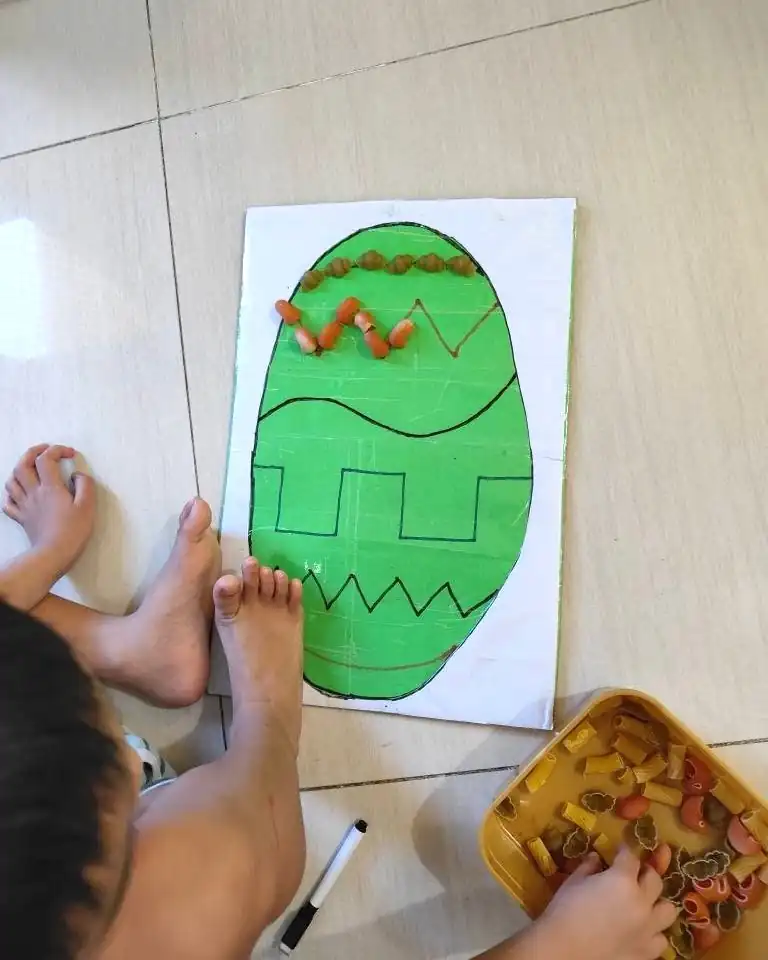
We ask, “What is your name?” No answer. “Where do you live?” Still no answer. “How old are you?” Nothing. And so on. Then we stop, because we did not get a response.
The pause is the hardest part. We used to knock and knock with questions. Then we learned to leave the door open and wait.
Step 3: Where do we start today?
Pick one step. Just one.
Tonight, try the pause at dinner. Count to ten. See what happens.
If your child communicates in a way that is hard to read, you may like our post on how your child joins in.
When you’re ready, our free 14-day guide walks you through this one small step at a time. Our free resources page also has a Parents Template to track your 14 days.
You are doing better than you think. One small moment at a time is enough.
Common questions
Can I do therapy at home without a therapist?
You can support your child with simple daily habits, but this is parent coaching, not a replacement for a licensed professional. You are not alone in this.
How long should I pause before helping my child answer?
Up to 10 seconds. Count silently, lean in, and let your child try first.
Does this replace an assessment?
No. It helps while you wait. Please see a licensed professional for an assessment when you can.
Want a gentle next step?
Our free 14-day guide walks you through becoming a Connected Parent, one small step at a time.
Get the free guideRead next
- Waiting for an Assessment? 6 Ways to See How Your Child Communicates
- From Public School Plans to a Farm Classroom: How We Began

Iryne is a mama and the creative force behind Somera Solutions. With a background in engineering and over 10 years of technical writing, she shares simple, gentle steps for families supporting a child’s communication and early learning at home. She and her husband, Marvin, homeschool their son on their farm in Kiblawan, Davao del Sur, The Philippines.